Funnel audit and leak map
Every stage measured, with the drop-off between each quantified, so the argument about what to fix first is settled by numbers.
Most businesses asking for more leads already have enough. What they have is a funnel that loses them — a form asking for too much, a quote that arrives two days late, a follow-up that stops after one unanswered call. Fixing that is cheaper than buying more traffic and the gain does not reset every month. This is the work between the click and the customer.

Figures from the WhatsApp nurture system and Young AI Champs programme documented on my case studies page. Results on other accounts are evidence of method, not a forecast for yours.
Three stages. Almost every business I audit is competent at the first and leaking badly at the second.

Before traffic, the offer. Plenty of campaigns fail because the thing being offered asks for too much commitment too early: a demo request from someone who wanted a price, or a “contact us” form from someone who wanted a brochure. The job is matching the ask to how ready the visitor actually is.
Then the mechanics of capture, which are mostly about removing friction. Every additional form field costs you submissions. Every second of mobile load time costs you more. These are unglamorous, measurable and usually where the fastest gains sit.
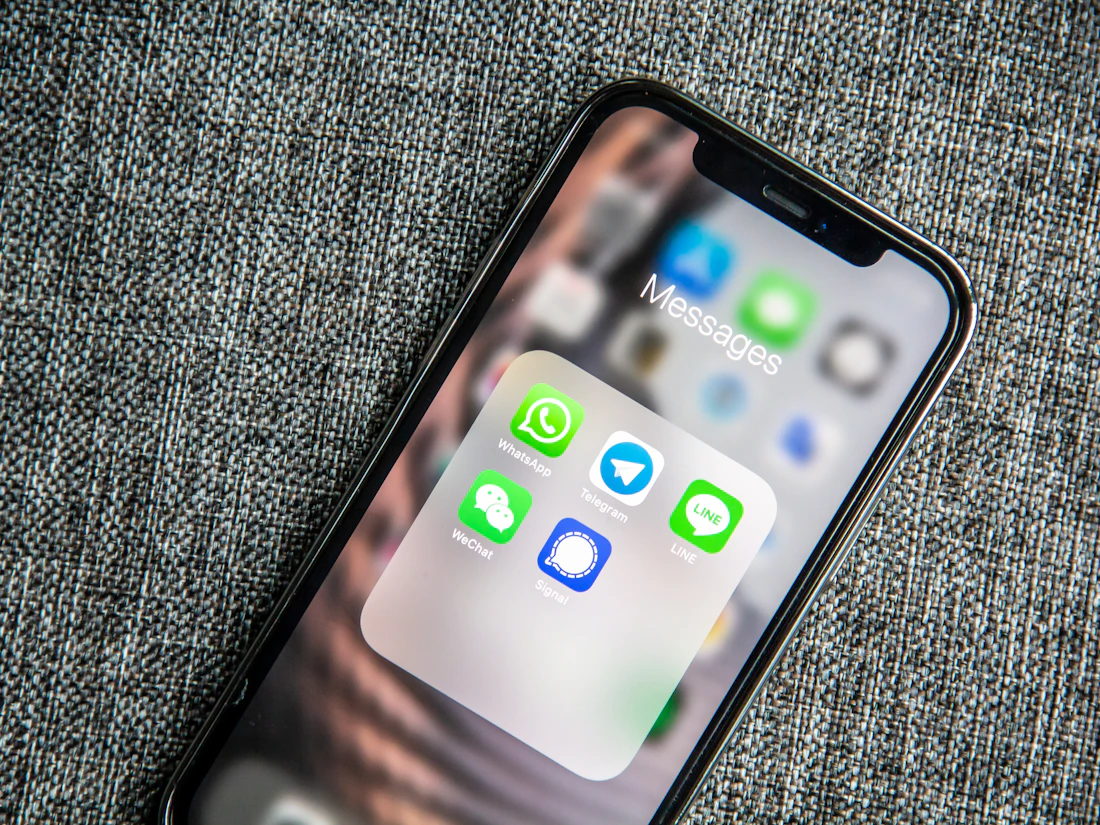
This is the stage that pays for the whole engagement. A lead that fills your form at 11pm and hears nothing until Tuesday has, in most categories, already spoken to someone else. Automation does not replace your sales team here — it holds the lead’s attention until a human is available.
Qualification matters as much as speed. A short set of screening questions sorts the serious from the curious and routes them to the right person, so your team spends its day on conversations worth having rather than on triage.
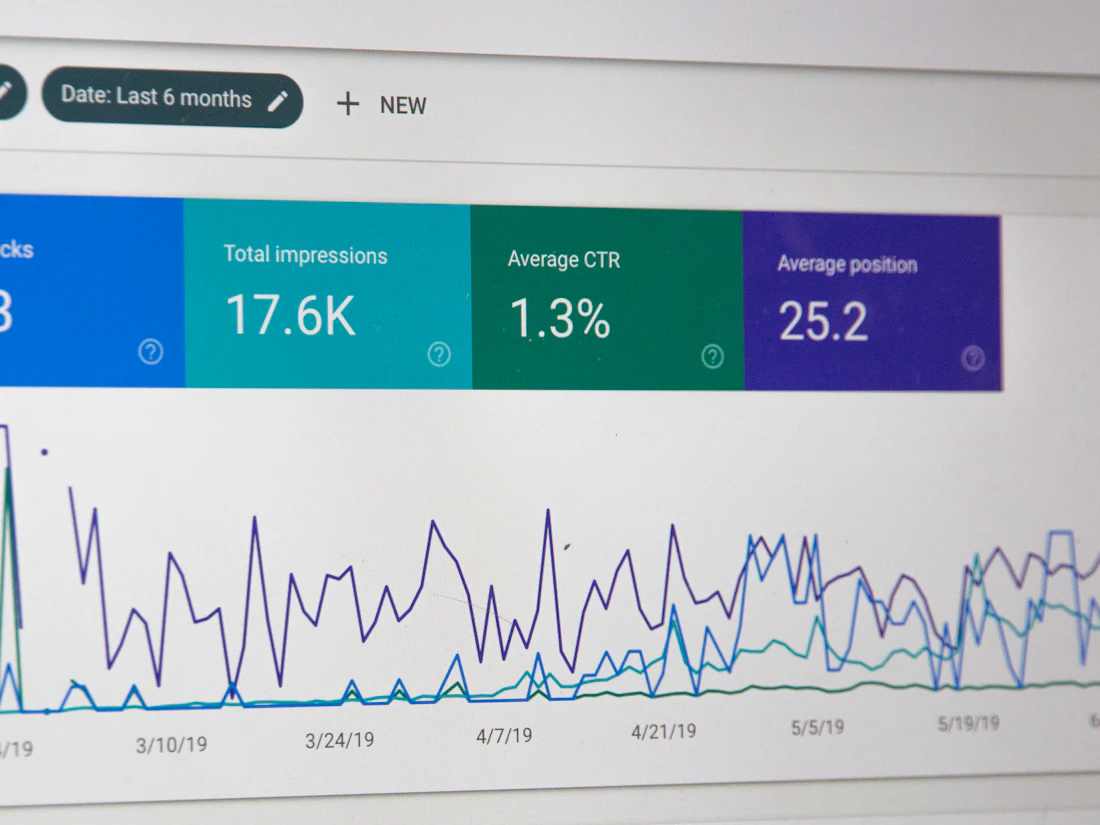
Growth marketing, stripped of the jargon, is the discipline of knowing your numbers at every stage and working on whichever one is worst. Cost per lead is only the first of them; the ones that decide whether the business grows sit further down.
Retention belongs here too, and it is the most commonly skipped work in Indian SME marketing. Existing customers and old enquiries are the cheapest revenue available, and almost nobody has a sequence for either.
Systems built inside your accounts, documented so your team can run them without me.
Every stage measured, with the drop-off between each quantified, so the argument about what to fix first is settled by numbers.
Instant-reply flow, screening questions, routing rules and drip sequence — built on the Business API with templates submitted and approved.
Welcome, nurture, objection-handling and win-back sequences written and scheduled, with deliverability basics configured properly.
Lead stages, scoring rules, owner assignment and status tracking — in a proper CRM or a structured sheet, whichever your team will genuinely maintain.
One view from traffic to closed deal, with lead source attribution, so you can see which channel produces customers rather than enquiries.
A written runbook covering how each flow works, what to change when the offer changes, and every credential — all in your accounts.
Traffic from search, paid campaigns or outreach — chosen to match where your buyers actually are. This stage is covered in depth on my performance marketing and search visibility pages; here it is simply the input.
An offer matched to buying stage, on a page built for one action, with the form cut to what your sales process genuinely uses and conversion tracking verified by submitting real test enquiries.
Automated screening within seconds, sorting serious enquiries from casual ones and routing each to the right person. Your team arrives at a conversation already warmed rather than starting from “so, what were you looking for?”
Most buyers are not ready on day one. Sequences across WhatsApp and email answer objections in the order they genuinely arise, keep you present through the decision period, and stop when someone converts or opts out.
Hand-off to sales with full context, then measure what closed and why. Won and lost reasons feed back into targeting and offers, and win-back sequences re-approach the enquiries you already paid for.
Three of these are commonly sold. Only one of them gets cheaper over time.
| Buy a lead list | Raise ad spend | Hire more sales staff | Fix the funnel | |
|---|---|---|---|---|
| Speed to first effect | Immediate | Days | Weeks to recruit and train | Days for follow-up, weeks for the rest |
| Cost behaviour | Per list, repeatedly | Rises linearly, forever | Fixed salary, rises with headcount | One-off build, gain persists |
| Lead quality | Poor — no consent, no intent | Same as today, just more of it | Unchanged | Improves — screening filters before sales time is spent |
| Consent and compliance | Real risk under WhatsApp policy and data protection rules | Fine | Fine | Consent and opt-out built in |
| Effect on cost per customer | Usually worse | Flat at best | Worse before better | Falls — same traffic, more conversions |
| What it fixes | Nothing | Volume only | Genuine capacity shortage | Leaks between click and customer |
| When it is right | Never, in my view | When the funnel already converts well | When good leads are genuinely going untouched | When enquiries arrive and do not close |
If your funnel already converts well and your team has spare capacity, more spend is the correct answer and I will tell you so instead of selling you a rebuild.
Platform costs — WhatsApp Business API messaging, email tools, CRM licences — are paid by you directly and quoted separately so nothing is buried in a fee.
Find out where the leads are going
Ongoing funnel and conversion work
One-off build, handed over to your team
No engagement includes purchased lead lists, scraped contact databases, unsolicited bulk messaging or a guaranteed number of customers.
The WhatsApp nurture system, documented in full on my case studies page.
Across several education clients the same pattern kept appearing: campaigns were producing leads, and sales teams could not call back fast enough. By the time a counsellor rang, the lead had already spoken to a competitor. Response time, not lead volume, was the constraint. The fix was a WhatsApp flow firing within ten seconds of the form, three screening questions before a human was involved, a five-message sequence from welcome through fees to testimonials and a booking link, and a Google Sheets CRM for scoring and status. It produced an eighty percent response rate and three times more qualified leads. On the Young AI Champs programme, the same follow-up discipline paired with dual-audience messaging for students and parents contributed to a sixty percent lift in enrolments and a forty percent lower cost per lead. Notably, none of that required spending another rupee on ads.
Before Sheikh’s automation, we were losing 60% of leads to slow follow-up. Now every lead gets a personalized response in seconds. The 80% response rate speaks for itself.
Five numbers. You can find most of them this afternoon, and they will tell you whether you need me.
If enquiries are low but qualification and close rates are healthy, you have a traffic problem and should spend on campaigns. If enquiries are plentiful but qualification is poor, your targeting or your offer is attracting the wrong people. If qualification is fine but close rates are low, the problem is in the sales conversation or the price — and no marketing system fixes that. If time to first response is measured in hours or days, stop reading and fix that one first. It is the cheapest and fastest change available to almost every business.
In most categories only a minority of enquiries are ready to buy immediately. The rest are researching, comparing, waiting for a budget cycle or waiting for someone else to decide. A single call to each of them loses the whole group. A sequence that stays useful and present over the following weeks captures the ones whose timing simply had not arrived — and the content is not complicated, because it is the same objections your sales team answers every day, written down once.
The trap is building something that cannot tell a hot lead from a cold one and keeps messaging everybody. Good automation knows when to stop: it exits someone who replies, hands them to a human, stops entirely when they convert, and honours an opt-out immediately. The goal is a human conversation sooner, not a longer sequence. If your automation annoys the people most likely to buy, it has cost you more than it earned.
Automated WhatsApp messaging at scale needs the Business API, with template approval and per-message pricing — a real platform cost worth planning for. It also needs genuine opt-in: people who contacted you or agreed to hear from you, not names from a purchased list. India’s Digital Personal Data Protection Act, 2023 governs how personal data is collected and used, so consent capture, a stated purpose and a working opt-out belong in the build from day one rather than bolted on when someone complains. I build with those constraints assumed; for a formal compliance review you should take specialist legal advice.
Some of what I find in a funnel audit is not a marketing problem at all. Nobody owns follow-up. Two people both think the other is calling. The quote takes three days because one person has to approve it. Those are process problems, and automation around them only makes the failure faster. I will tell you when the fix is organisational rather than technical — it is cheaper for you to hear it than to buy a system that cannot solve it.
Including the ones where the honest answer loses me the sale.
No. I build systems that generate your own leads, who arrive having chosen to contact you. I do not sell purchased lead lists or scraped contact databases, because those contacts never consented to hear from you, they convert poorly, and contacting them creates real problems under WhatsApp’s own opt-in policy and India’s data protection rules. If what you want is a list to call tomorrow, I am not the right person.
A qualified lead is one your sales team would agree is worth calling — not merely a form submission. The definition is set with you before anything is built, usually combining need, budget range, timeline and decision authority, and it is what automated screening questions exist to establish. This matters because volume and value diverge fast: a campaign producing twice the enquiries at half the qualification rate has achieved nothing except more work for your team.
It is routinely the largest available gain in the whole funnel, and the cheapest to fix. Across several education clients, the pattern I kept finding was identical: campaigns produced leads, sales teams could not call back fast enough, and by the time a counsellor rang the lead had already spoken to a competitor. The WhatsApp automation documented in my case studies triggers within ten seconds of a form submission and produced an 80% response rate, three times more qualified leads, and on the Young AI Champs programme contributed to a 60% increase in enrolments. Before raising ad spend, find out how long your leads currently wait.
It varies so much by industry, traffic source, offer and price point that any single benchmark figure is close to useless — a high-ticket B2B page and a free-webinar signup page are not comparable. The honest approach is to measure your own baseline first and improve against that, rather than chase a number from someone else’s industry report. What I can say is that most underperforming pages are losing enquiries to mundane problems: slow mobile loading, forms asking for more than they need, unclear pricing, and no obvious reason to act now.
For statistically meaningful A/B testing you need enough conversions to distinguish a real difference from noise — in practice a few hundred conversions per variant over a reasonable test window, which most small businesses do not have. Below that threshold, testing produces confident-looking conclusions from random variation. The productive alternative is fixing known problems rather than testing hypotheses: page speed, form length, mobile layout, message match and pricing clarity are improvements you can make on reasoning rather than on a test result.
Whatever fits the size of the problem. For small teams a well-structured Google Sheet with lead scoring and status tracking is often genuinely better than a CRM nobody updates — that is what the WhatsApp nurture system documented in my case studies runs on. For larger or more complex sales processes a proper CRM earns its cost. The common failure is buying expensive software to solve a process problem: if leads are being lost because nobody owns follow-up, a new CRM will not fix that.
Automated WhatsApp messaging at business scale requires the WhatsApp Business API, which has its own approval process, message template review and per-message pricing — so there is a platform cost beyond my fee, and it should be in your budget from the start. It also requires genuine opt-in: you may message people who have contacted you or consented to hear from you, not contacts from a purchased list. India’s Digital Personal Data Protection Act, 2023 governs how personal data is collected and used, so consent capture, a clear purpose and a working opt-out should be built into the flow rather than added later. I build with those constraints assumed, and I am not a lawyer — for a formal compliance review, take specialist advice.
Follow-up automation shows almost immediately, because response time changes the day it goes live and the effect on reply rates is visible within a week or two. Landing page and offer changes typically need four to eight weeks to accumulate enough conversions to judge. Retention and lifecycle work takes a full sales cycle before it can be assessed honestly — if your customers take three months to decide, you will not know in three weeks.
Fix the funnel first, almost always, because it is cheaper and the gain is permanent. Doubling ad spend doubles cost; doubling the rate at which existing enquiries convert costs nothing extra every month afterwards. Work out roughly how many of your enquiries currently become customers and how long they wait for a first reply. If the answers are uncomfortable, more traffic will mostly produce more waste — you will be paying more to lose leads at the same rate.
Not cold calling, and not unsolicited bulk messaging. For B2B I work on account-based targeting and LinkedIn outreach where the approach is relevant and researched rather than mass-sent, which is covered on my LinkedIn marketing page. The distinction that matters is between contacting someone with a genuine reason and contacting a list because you bought it — the first is sales, the second damages your domain reputation and your brand.
Access to look at what exists — analytics, ad accounts, your current forms and whatever you use to track enquiries — plus an honest conversation about your sales process: who follows up, how quickly, what they say, and where deals stall. The second part matters more than the first. Most funnel problems I find are process problems wearing a marketing costume, and no amount of automation compensates for nobody owning the follow-up.
Ready to scale your growth? Drop me a message or reach out directly.