Growth plan on one page
Target CPA, channel split, monthly budget and the milestones we expect at 30, 60 and 90 days — agreed before anything goes live.
Most ad accounts buy traffic. A performance system buys outcomes. I build the whole chain — channel strategy, creative, landing page, follow-up automation and attribution — so you can see exactly which rupee produced which enquiry, and confidently spend more on the parts that work.
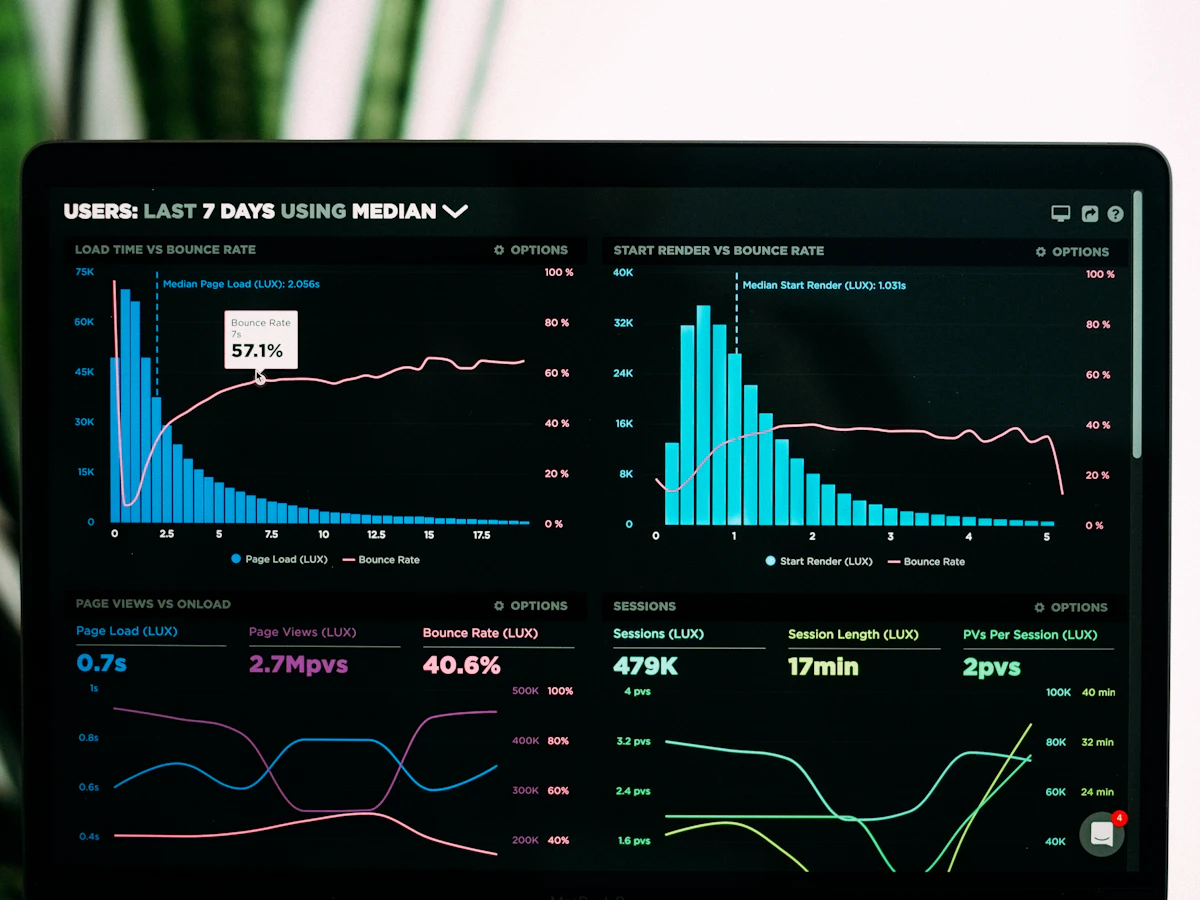
Figures below are drawn from campaigns managed across education, fitness, coaching and D2C brands. Results vary by market, offer and budget — these are directional, not a guarantee.
Performance marketing fails when the layers are owned by different people who never talk. Here they are built together.

Before a single campaign goes live, we settle the arithmetic: what a customer is worth, what you can afford to pay for one, and which channel can deliver at that price. That target cost per acquisition becomes the number every decision is judged against.
From there the account is structured so that spend follows intent. High-intent search gets budget priority, social carries demand generation and retargeting picks up the people who already raised a hand.

Sending paid traffic to a slow, generic homepage is the fastest way to waste a budget. Each campaign gets a landing page written for the exact promise in the ad, loaded fast, and stripped of anything that is not the next step.
Behind the form sits the part most people skip: routing. A lead that sits unread for six hours is usually a lost lead, so enquiries are pushed to WhatsApp, email and your sheet or CRM the moment they arrive.

Platform dashboards flatter themselves. Meta and Google will both happily claim the same conversion. The fix is a single source of truth: GA4 and Google Tag Manager configured properly, server-side signals where the browser is unreliable, and offline conversions fed back once a lead actually becomes a customer.
You get a weekly report in plain English — what was spent, what came back, what changed and what happens next. No vanity metrics, no forty-tab spreadsheet.
Concrete deliverables, not a vague retainer.
Target CPA, channel split, monthly budget and the milestones we expect at 30, 60 and 90 days — agreed before anything goes live.
Written and produced in-house: search copy, static and carousel concepts, short-form video scripts and hooks, all versioned for testing.
Designed and coded, not dropped into a bloated template. Fast, responsive and matched to the ad that sent the visitor.
WhatsApp auto-replies, drip follow-ups, lead scoring and CRM sync so nothing sits waiting for someone to notice it.
GA4, GTM, Meta CAPI and conversion imports configured and validated — with a documented event map handed to you.
A written summary each week, a working session each month, and a test log showing exactly what was tried and what it did.
I go through your existing accounts, analytics, landing pages and past creative, then sit with you to understand margins, sales process and capacity. You get the audit findings in writing whether or not we continue.
Target CPA, channel mix, budget split and a realistic forecast. We agree what success looks like in numbers before spending anything, so nobody is grading their own homework later.
Campaigns, audiences, creative, landing pages and tracking are built together. Tracking is validated with test conversions before launch — not discovered to be broken in month two.
Controlled launch with capped budgets while the platforms exit their learning phase. Early spend buys information; we read it, cut what is dead and double down on what is not.
Budget shifts toward winners, creative is refreshed before fatigue sets in, and the funnel is tightened where the drop-off is worst. Weekly written reports, monthly strategy calls.
An honest look at the three common ways businesses buy performance marketing.
| Full-service agency | Cheap freelancer | Working with Sheikh Faiz | |
|---|---|---|---|
| Monthly cost | Large retainer plus a percentage of spend | Low fee, but scope stops at campaign setup | Flat fee sized to the account — typically well under an agency retainer |
| Who touches the account | A junior executive you have never met | One person, often juggling six clients | The person you hired, in the account every week |
| Landing pages | Billed separately by a different team | Usually out of scope | Designed and built as part of the engagement |
| Tracking setup | Often assumed to be someone else's job | Rarely goes beyond the platform pixel | GA4, GTM, CAPI and offline conversions configured and validated |
| Reporting | Automated slide deck full of impressions | A screenshot in a chat window | Weekly written report in plain English plus a live dashboard |
| Response time | Ticket queue, 24–72 hours | Whenever they next log in | Direct WhatsApp and email — same working day |
| Contract | Six or twelve month lock-in | Ad hoc, no continuity | Month to month after the first 90 days |
Pricing is quoted after the audit, once the account size and workload are clear. No package is charged as a percentage of your ad spend — that incentive points the wrong way.
One channel, one offer — for businesses proving paid works
Multi-channel scaling with full conversion infrastructure
Multiple products, markets or locations
Ad spend is paid directly to Google and Meta by you and is never routed through me. You keep full ownership of every ad account, pixel and analytics property — during the engagement and after it.
Education client, Thane — a paid programme with strong margins but expensive leads.

The change was not a clever hack. We rebuilt the account so high-intent searches got the budget, wrote a landing page that answered the three objections the sales team heard every day, and put an instant WhatsApp reply behind the form. Cost per qualified lead came down and — more usefully — we could finally see which keywords produced enrolments rather than just enquiries.
If you are weighing this up for the first time, this section is for you.
Traditional advertising buys attention and hopes. Performance marketing buys measurable actions — a form fill, a WhatsApp message, a booked call, a sale — and every rupee is judged against the value of that action. The discipline is not the ad platform; it is the accounting behind it.
That is why the work starts with your numbers rather than your creative. If a customer is worth ₹8,000 in gross margin and you convert one in five qualified leads, you can afford roughly ₹1,600 per qualified lead before the maths stops working. Every campaign decision after that is simply a question of staying under that ceiling while finding more volume.
Expect a shape rather than a date. Weeks 1–2 are build and instrumentation. Weeks 3–6 are the learning phase — spend is deliberately buying information, and cost per lead is usually at its worst here. Weeks 6–12 is where structure, negative keywords and creative winners compound and cost per lead settles. Anyone promising a fixed result in week one is guessing.
Your ad accounts, your pixel, your GA4 property, your landing pages and your lead data should sit under your logins. If an agency or freelancer builds these inside their own assets, leaving costs you your entire history. Everything I build is created in your accounts from day one.
Performance marketing works best when you have a repeatable offer, enough margin to pay for a customer, and the capacity to answer leads quickly. It works poorly when the offer is unclear, the margin is thin, or nobody is available to follow up. If you are in the second group, the honest advice is to fix that first — and I will say so during the audit rather than take the retainer.
Performance marketing is paid advertising where every rupee is tied to a measurable action — a lead, a call, a booking or a sale — rather than to impressions or reach. Campaigns are optimised against a target cost per acquisition derived from your actual margins, and budget moves toward whatever hits that target.
It depends on your cost per click and how many conversions the platforms need to learn. As a rule of thumb you want enough monthly spend to generate at least 30–50 conversions, because below that the algorithms and your own reporting are both working on noise. I will model a realistic starting figure for your market during the free audit.
First leads usually arrive within days of launch, but meaningful cost efficiency takes 6–12 weeks. The first month is deliberately about learning: gathering conversion data, building negative keyword lists and finding which creative angle resonates. Optimisation compounds from month two onward.
No. I charge a flat monthly fee based on the workload of the account. Percentage-of-spend pricing rewards the manager for spending more of your money, which is exactly the wrong incentive. Your ad budget is paid directly to Google and Meta.
You do, completely. Everything is built inside your own Google Ads, Meta Business, GA4 and hosting accounts. If we stop working together you keep every campaign, every audience, all historical data and all landing pages — no export request needed.
Most of my work has been in education and coaching, fitness and wellness, professional services and D2C. The method transfers to any business with a clear offer and a trackable enquiry. I do not take on categories restricted by ad policy or where I cannot see a credible path to a profitable cost per lead.
Ready to scale your growth? Drop me a message or reach out directly.